- - -
- hours mins seconds
to get your checks by
Monday, Oct. 26th

 0
You have no items in your shopping cart.
Stop Payment on a Check: How It Works for Businesses
You wrote a check, mailed it, and now it is lost, wrong, or no longer owed. The one tool you have is a stop payment, and it runs on a clock that most people only learn about when they need it.
This guide explains how a stop payment on a check works for a business account. You will see who is allowed to request one, how long it lasts, what happens if it is too late, and how to keep records so your books and your bank agree.
Quick Summary
A stop payment on a check is an instruction to your bank not to pay one specific check you wrote. Any authorized signer can request it, a written order lasts six months, and it only works if the check has not already been paid. It does not cancel what you owe the payee.
- Any authorized signer can request it. On a business account that needs two signatures, one authorized signer is still enough to stop a check.
- Timing decides the outcome. Your bank must receive the order early enough to act before it pays the check, so look at your account first and call the same day.
- Written orders last six months. A phone request lapses after 14 calendar days unless you confirm it in writing, and a renewal must be in writing while the first order is still active.
- A stop payment does not cancel the debt. The payee may still be owed, so plan a replacement payment or a clear conversation.
- Bank-issued items usually work differently. Cashier's checks and money orders generally cannot be stopped with an ordinary stop payment order.
- Records protect you. If a bank pays a stopped check by mistake, you carry the burden of proving the loss, so keep the confirmation and log every request.
| Question | Short answer |
|---|---|
| Who can request it? | Any person authorized to draw on the account, even when two signatures are normally required. |
| How long does a written order last? | Six months, renewable in writing. |
| How long does a phone order last? | 14 calendar days, unless confirmed in writing. |
| When is it too late? | When the bank has already paid or processed the check. |
| Does it cancel the debt? | No. You may still owe the payee. |
| What does it not cover? | Cashier's checks and money orders generally, and electronic payments, which follow other rules. |
What is a stop payment on a check?
A stop payment on a check is a formal instruction you give your bank not to pay one specific check that you wrote. The bank flags that check on your account, and if it shows up later, it is returned unpaid instead of being charged to you.
The right belongs to the account holder, not to the payee. Under the Uniform Commercial Code, a customer can stop payment on an item drawn on their account, as long as the order describes the item well enough for the bank to find it (UCC section 4-403). Most states have adopted their own version of that code, and your account agreement adds its own rules. Treat this guide as general information, not legal advice, and confirm the details with your bank.
How is a stop payment different from voiding a check?
Voiding is something you do on your own side. You mark the check void, record it, and keep it. A stop payment is something your bank does after the check has left your hands. If the check is still on your desk, voiding is the simpler fix and no bank request is needed.
Our guide to what a voided check is shows how to do it properly.
Is a stop payment the same as canceling a check?
In everyday speech, yes. People say cancel, stop, or put a hold on a check and usually mean the same bank instruction. In banking language, though, a canceled check is one that has already been paid and returned to you as proof of payment, which is the opposite situation.
When should a business stop payment on a check?
A stop payment is for the moment when a check is out of your hands and paying it would be a mistake or a risk. Common business reasons include:
- A check lost in the mail. The vendor says it never arrived and you plan to send a replacement.
- A stolen checkbook or an altered check. Check stock is missing, or a mailed check was tampered with.
- A wrong amount, wrong payee, or duplicate payment. You spot the error after the check is mailed.
- A check issued in error. An approval was withdrawn, or the payment went to the wrong vendor or employee.
- A genuine order dispute. The goods never shipped or the job was cancelled before work began.
Should you stop payment on a lost check?
Usually yes, but not before a quick check. Look at your online statement first to confirm the check has not been paid. Then place the stop payment before you send a replacement. If you send the second check first, both can be cashed and you pay twice.
The Consumer Financial Protection Bureau confirms that you can stop payment on a lost check and write a new one, and that you can ask the party who lost it to reimburse any fee your bank charges.
What if the checkbook or a mailed check may have been stolen?
Treat it as a fraud risk, not just a lost payment. A stop payment covers only the checks you name. If the whole checkbook is missing, or a mailed check was changed after it left your office, speak to your bank about the account itself.
The same UCC section lets a customer close the account, and a new account means a new account number on your next checks. Our article on check washing explains how mailed checks get altered and who pays.
Who can stop payment on a business check?
Any person who is authorized to draw on the account can stop payment. Where an account requires more than one signature, any one of those signers can still stop payment. That comes straight from UCC section 4-403(a), and it matters for businesses. One signer can halt a check that two people were meant to approve, which is by design, because stopping a payment is a protective step.
The right does not extend to the other side. A vendor, a customer, or an employee holding a paycheck cannot ask your bank to stop it. Only your side of the account can.
Put this in writing. Decide who may request stop payments, who approves the replacement, and who records it. Our check signing policy guide covers what to write down, and who signs a business check explains signing authority in plain terms.
How do you stop payment on a check step by step?
The steps below work for most business accounts. Your bank may have its own form or phone line, so use this as a checklist and follow your bank's process.
- Confirm the check has not been paid. Look at pending and posted items in online banking. If it has cleared, a stop payment cannot help.
- Gather the check details. You need the check number, exact amount, date, and payee, as listed below.
- Contact your bank right away. Depending on the bank, that means online banking, the app, a phone call or a branch visit.
- Give the order and get a reference. Ask for a confirmation number or a written copy of the order.
- Confirm in writing. If you gave the order by phone, send written confirmation within 14 days so it does not lapse.
- Tell the payee and arrange the replacement. Explain that the original is stopped and do not issue the new check until the stop is in place.
- Record it and set a reminder. Log the request and note the date the order will expire.
What information does your bank need to stop a check?
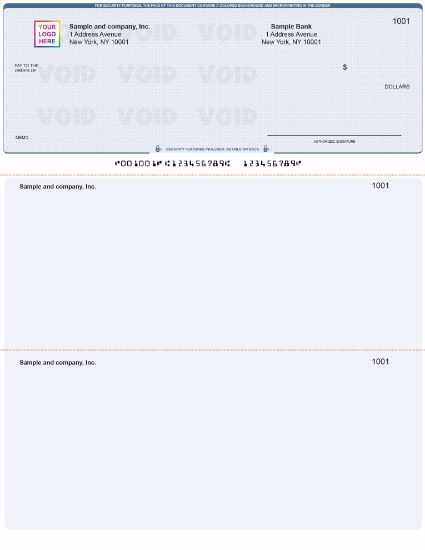
The bank has to be able to identify the exact item. Have these details ready before you call:
- The check number, printed on the check and listed in your register
- The exact amount, in dollars and cents
- The date written on the check
- The payee name, exactly as written
- Your account number, if the bank asks for it
Can you stop payment on a check without the check number?
Sometimes. The order must describe the check clearly enough for the bank to find it, so a precise amount, date and payee all help. The check number is still the most reliable detail. You can usually find it in your check register or online statement, and the MICR line on a returned check image shows it as well.
How long does a stop payment on a check last?
A written stop payment order lasts six months. A phone order lapses after 14 calendar days unless you confirm it in writing within that time. Both rules come from UCC section 4-403(b), and your bank may apply its own, sometimes longer, limits.
| Situation | How long it lasts | What you need to do |
|---|---|---|
| Order given in writing | Six months | Renew in writing before it ends if the check could still be presented. |
| Order given by phone only | 14 calendar days | Confirm in writing within 14 days or the order lapses. |
| Renewal | Another six months | Give it in writing while the original order is still in effect. |
| Check presented after its six month stale date | Bank is not required to pay it | Do not rely on this alone, because a bank may pay a stale check in good faith. |
The six months matter because the stopped check does not disappear. It is still a piece of paper that someone could try to deposit later. Put the expiry date in your calendar a few weeks early.
A bank is also not required to pay an ordinary check presented more than six months after its date (UCC section 4-404), but it may choose to pay one in good faith. Our guide on how long a business check is good for covers stale dating in full.
Can you renew a stop payment order?
Yes. A renewal gives you another six months, but it has to be given to the bank in writing while the original order is still active. If it expires first, you start over, and the check could be paid in the gap.
Can you remove a stop payment?
You can ask your bank to release it, and each bank has its own process. Before you do, remember that the check becomes payable again. If a replacement has already gone out, releasing the stop on the original can lead to a double payment.
Can you stop payment on a check that was already deposited or cashed?
Usually not. The order has to reach the bank early enough for the bank to act on it before it pays the check. Once the check has been paid, there is nothing left to stop.
A deposit does not always mean payment has happened yet. A deposited check can still be pending, so a stop payment may work. Do not count on it, because checks can be processed quickly. That is why the first step is always to check your account, and the second is to act the same day.
If the check has already been paid, do the following:
- Call your bank immediately and explain exactly what happened.
- Say whether the payment was proper. An altered amount or a forged signature is a different kind of claim from a late stop payment.
- Contact the payee and ask for the money back if the payment was an error.
- Document everything, including dates, names and reference numbers.
- Review your controls so the same gap does not repeat.
Banks and state law set deadlines for reporting unauthorized or altered checks, so do not wait. For the fraud side of this, read our article on check washing.
What happens if the bank pays a check after you stopped payment?
If a stopped check is paid anyway, the law puts the work on you. Under UCC section 4-403(c), the customer must prove both the fact and the amount of the loss that came from paying against the stop payment order. In practice that means a clean paper trail.
From the payee's side, a properly stopped check that is deposited should come back unpaid. Keep these items on file in case you ever need to prove it:
- The confirmation number or a copy of the written order
- The date and time you gave the order
- The check details you provided
- The statement line showing the payment
- Your messages with the payee
Is it legal to stop payment on a check?
Yes. Stopping payment is a right of the account holder, and there are many ordinary reasons to use it. What matters is why you use it. A stop payment does not cancel what you owe, and the Consumer Financial Protection Bureau's own answer for a lost check is to stop payment and write a new one, not to skip the bill.
If you stop payment for goods or services you received and accepted, the payee can still pursue the debt. Depending on the facts and your state, the consequences can go beyond a civil claim. If there is a real dispute, tell the payee, put your position in writing, and consider advice from an attorney.
Should you stop payment after services were rendered?
Only when there is a genuine dispute that you cannot resolve any other way. A stop payment is not a negotiating tool. A better route is to raise the issue directly, offer a partial payment for work that was done, and keep the conversation in writing.
Which checks and payments cannot be stopped this way?
- Cashier's checks and money orders. The bank is the issuer, so the ordinary stop payment order generally does not apply. Lost or stolen items are generally handled through the issuing bank instead.
- Checks that have already been paid. Once the bank has paid the item, the window has closed.
- Electronic payments. ACH and card payments follow other rules and deadlines, so ask your bank instead of assuming the check process applies.
How should a business track stop payments and replacement checks?
Calling the bank is only half the job. For a business, the harder part is the paper trail. A stopped check that still shows as outstanding breaks your reconciliation, and a replacement that is not linked to the original invites a double payment.
| Situation | Best action | Watch out for |
|---|---|---|
| The check is still on your desk | Void it and record it | No bank request is needed, but keep the voided check. |
| A vendor says the mailed check never arrived | Confirm it is unpaid, stop payment, then reissue | Reissuing first can leave two valid checks. |
| The checkbook or check stock is missing | Call the bank about the account, stop the affected checks, consider a new account | A stop payment covers only the checks you name. |
| The amount or payee was wrong on a mailed check | Stop payment and send a corrected check | Tell the payee to discard the original. |
| An old check is still outstanding past six months | Confirm it is unpaid, reissue, and void the old one in your books | A bank may still pay a stale check in good faith. |
| An employee says a paycheck was lost | Stop payment, then issue a replacement | Keep the payroll record and the replacement linked. |
Once the decision is made, follow the same routine every time:
- Log the request the same day, using the columns shown in the log table below.
- Void the original in your register or accounting software and note the bank reference.
- Link the replacement. Write the original check number in the memo or register line of the new check.
- Send written confirmation to your bank within 14 days if you gave the order by phone.
- Set a renewal reminder a few weeks before the six month order ends if the old check could still surface.
- Review it at month end. Stopped checks should appear as voided in your books, not as outstanding.
| Log column | What to record |
|---|---|
| Date requested | The day and time you gave the order to the bank |
| Check number | The number printed on the stopped check |
| Payee and amount | Exactly as written on the check |
| Reason | Lost, stolen, wrong amount, issued in error, or disputed |
| Requested by | The authorized signer who placed the order |
| Method and bank reference | Phone, online or written, plus the confirmation number |
| Order expires | Six months from a written order, or 14 days from a phone-only order |
| Replacement check number | The new number, so the two checks stay linked |
How do you handle a stop payment on a payroll check?
The process is the same, but the records matter even more. Stop the original, void it in your payroll records, and issue a replacement under a new number. Our guides to making payroll checks and whether payroll checks can bounce cover the surrounding rules, and the payroll checks page shows the formats we print.
Should you reissue a replacement with the same check number?
No. As a practical rule, never reuse the number of a stopped check. The original is still a live item until its order expires, and reusing the number makes reconciliation and bank matching harder. Use the next number in your sequence and write the old number in the memo.
What do you need to reorder replacement checks?
If checks were lost or a checkbook was stolen, you may need a fresh supply quickly. When you order computer checks from Checks Next Day, the order asks for four details: your bank routing number, your account number, a starting check number, and your business name and address. Our guide to ordering business checks for the first time walks through each one.
Choose a starting check number above the highest number you have issued, including any stopped checks. If you opened a new account after a theft, double check the new account number before you submit.
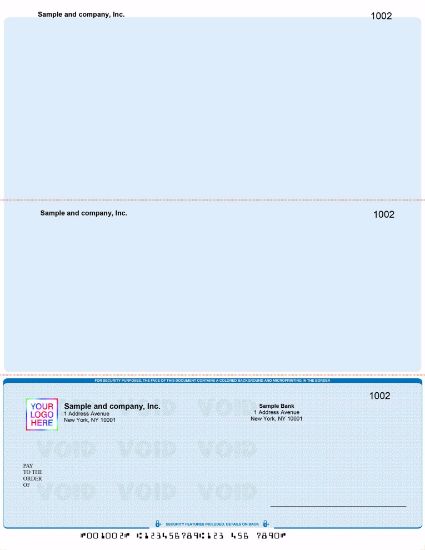
Prefer to write checks by hand? Manual business checks work the same way for the numbering. Orders placed before 2:00 PM Eastern on a business day are produced the same day for next-day arrival when the details are complete, as explained on our same-day production page.
What should you do next?
- Check your account today and confirm whether the check has been paid.
- Place the stop payment, get a reference, and follow up in writing if you used the phone.
- Log it, void the original in your books, and set a renewal reminder.
- Replace the payment with a new check under a new number.
If you need new checks while you sort this out, contact us and we will help you choose the right format.
Why businesses order checks from Checks Next Day
Printed with your bank details. You enter your routing number, account number, starting check number, and business name and address when you order.
Same-day production on weekday orders. Orders placed before 2:00 PM Eastern, Monday through Friday (excluding holidays), are produced and shipped the same business day for next-day arrival, as long as the details are complete and verified.
Formats that match how you work. Choose computer checks, manual business checks or blank check stock to suit your software and workflow.
Faster reorders. Reorders usually move faster because artwork and specifications are already on file.
About the Author
The Checks Next Day team writes about business checks, check printing and check safety for small businesses.